.png)
Jesse Jackson Activist Fashion Timeline: How His Style Evolved With the Civil Rights Movement
- Feb 17
- 6 min read
From football fields to presidential campaigns, Jesse Jackson’s wardrobe told the story of a lifetime in activism. Here is the late Jesse Jackson activist fashion timeline.

When we talk about Rev. Jesse Jackson, we usually think about speeches, marches, and historic moments. But if you really look closely, his fashion tells a story too.
And not in a flashy way — in a real, lived-life way.
His clothes reflected where he was in life, what he was fighting for, and how he wanted to show up in the world. So let’s take a walk through the Jesse Jackson activist fashion timeline, because it’s honestly like flipping through a visual history book.
1958 — The Athlete Era
Before the activism, before the politics, there was Jesse the athlete.

At Sterling High School’s 1958 homecoming game in Greenville, South Carolina, he was photographed in his dirty football uniform after a game. No polish, no presentation — just grit. He was known as a strong athlete and even had offers from the Chicago White Sox and a football scholarship to the University of Illinois.
He chose football, later transferring to North Carolina A&T State University.
At this stage, his “style” was pure determination. Sports shaped his discipline, and that competitive drive would later fuel his activism.
1960 — The Student Protester
Fast forward to 1960, and now we see a young Jesse Jackson standing outside a Greenville jail after being arrested for entering a “Whites only” library.

What was he wearing? A crisp white button-up, buttoned to the top, paired with a suit jacket and slacks — but no tie.
It sounds small, but it wasn’t. He looked respectful, composed, and serious. Even in protest, he presented himself as someone who demanded dignity.
Two months later, the library abandoned segregation. That moment mattered.
And in this Jesse Jackson activist fashion timeline, it marks the shift from athlete to activist.
1968 — Standing With Dr. King
In April 1968, Jackson stood with Dr. Martin Luther King Jr. on the balcony of the Lorraine Motel in Memphis — the day before King was assassinated.

Jackson wore a corduroy jacket, striped shirt, and cuffed raw denim. It was a relaxed but intentional look, reflecting the style of the era and the grassroots nature of the movement.
This wasn’t about looking elite. It was about being connected to the people.
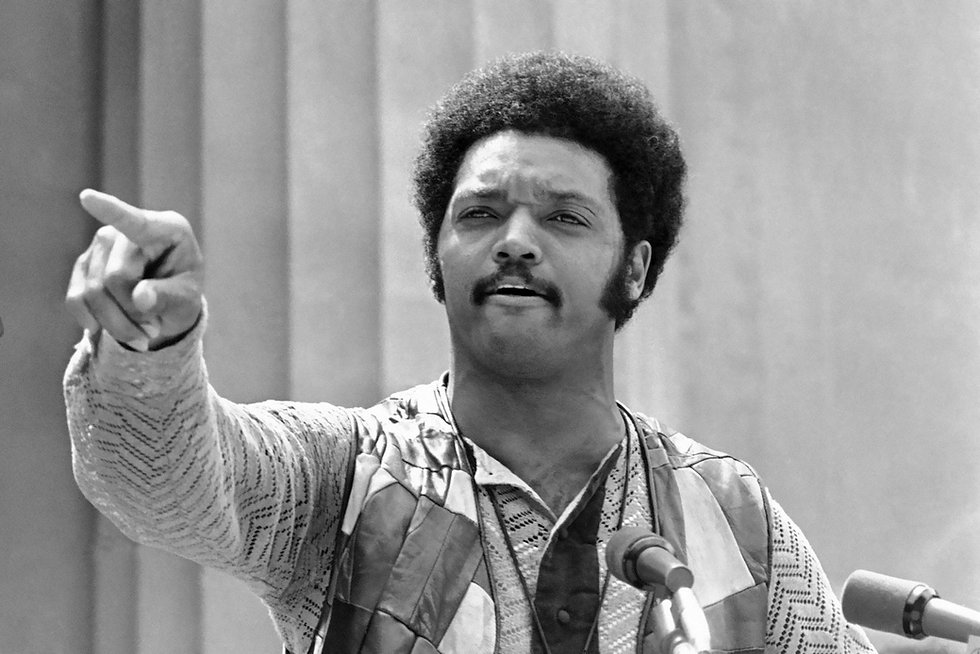
1969–1971 — Protest Style & Black Pride
As the late 60s turned into the early 70s, Jackson’s wardrobe leaned into cultural expression.
At rallies and protests, he wore:
Fringed shirts
Bell-bottom pants
Leather vests
Turtlenecks
Long leather trench coats
Scarves and gloves
These looks aligned with the Black pride and cultural awakening happening nationwide.



One iconic moment in 1971 shows him raising a clenched fist from a police van after being arrested during an Operation Breadbasket protest. He wore a light turtleneck, leather trench, and scarf — powerful, bold, and symbolic.

This period of the Jesse Jackson activist fashion timeline shows fashion as identity and resistance.
1975 — The Operation PUSH Years
By the mid-70s, Jackson had formed Operation PUSH.

His style? Large afro, leather coats, and confident silhouettes.
He looked like a leader who was both relatable and commanding. His presence alone filled a room.
1980–1983 — The Political Shift

As Jackson stepped further into national politics, his wardrobe matured.
In 1980, meeting Ronald Reagan, he wore a short-sleeved shirt layered over a white tee — still relaxed but cleaner.

By 1983, when he announced his presidential candidacy, the transformation was clear: structured suits, classic colors, polished presentation.

He famously said,
“Leadership is colorless and genderless.”
His style matched that message. He dressed like someone ready to lead a nation.
Global Diplomat Era
As his work expanded internationally, his fashion became more understated and diplomatic.


Clean suits.Neutral tones.Professional but approachable.
He wasn’t just representing himself anymore — he was representing communities and causes worldwide.
Later Years — Legacy & Dignity
In his later years, Jackson’s style softened but stayed dignified.
Dark suits, lapel pins, relaxed tailoring.
Nothing flashy. Nothing loud. Just the quiet confidence of someone who had earned his place in history.


Final Thoughts
The Jesse Jackson activist fashion timeline shows us something powerful:
Fashion doesn’t always have to be trendy to be meaningful. Sometimes it reflects growth, culture, and purpose.
From a football uniform to presidential suits, Jesse Jackson’s style evolved with his mission. His clothes mirrored his journey from athlete, to activist, to global leader.
And honestly? That’s a reminder that how we show up in the world can say just as much as what we say.


Comments